
 Afrikaans
 English
 Français
 Português
 Nederlands
 Norsk Nynorsk
 Español
 Español
 Deutsch
 Italiano
Three Forgotten Mazda’s Prove The Brand Is Weirder Than Miata Fans Realize
Jul
The Mazda Miata is, no doubt, an automotive icon. It has helped make driving enjoyment accessible to the ordinary consumer and has earned itself a place in car enthusiasts’ hearts all over the world with its iconic silhouette. However, there is more to Mazda’s history than just the Miata.
Over the course of its nearly century-long journey, Mazda has produced a range of weird and wonderful models, many of which have been consigned to the archives of automotive history. We are taking a closer look at three of them: a high-performance sedan, a quirky off-roader, and a rotary-powered coupe. Here is how they contributed to Mazda’s rich and varied history, making it the unique brand it continues to be today.
The Lantis Type R: A Mazda With Motorsport DNA
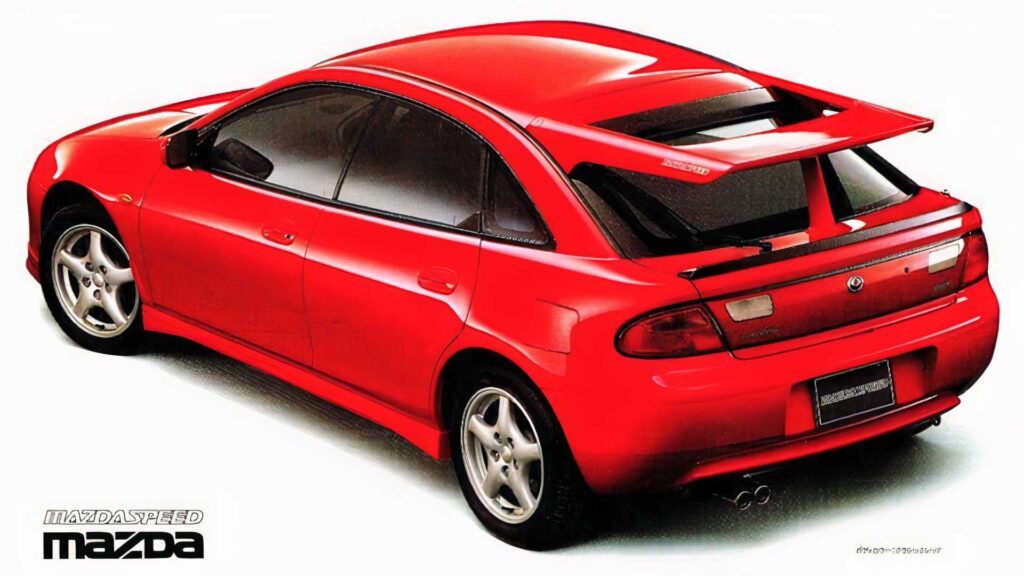
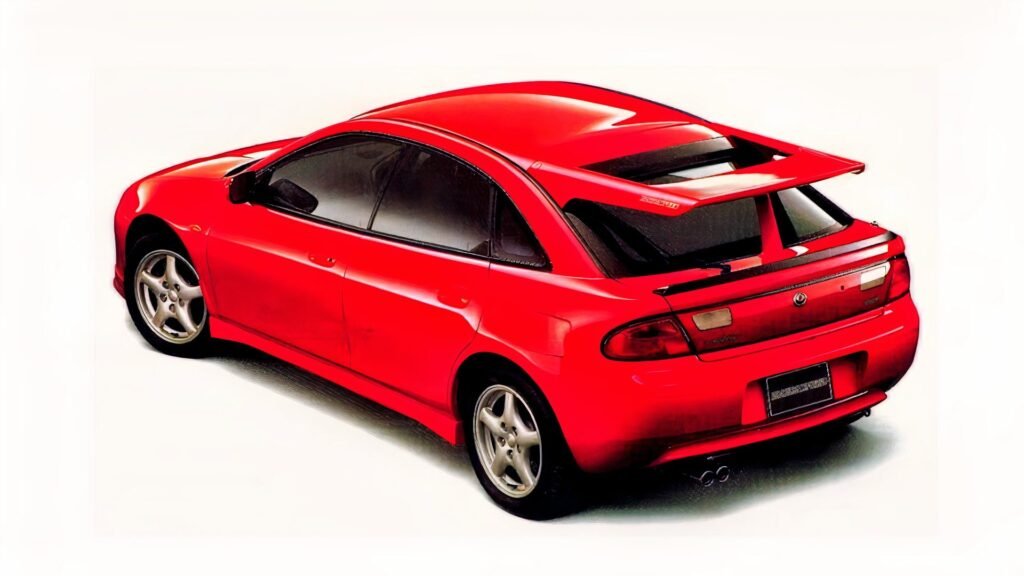
We start with an obscure Mazda model that drivers outside Japan could not get, but which is now old enough to be eligible for import if you’re interested in owning a rare piece of Mazda history. The Lantis Type R was a JDM-only high-performance version of the Lantis sedan, a model also known as the 323F, the Allegro, or the Artis in various regions around the world. There was even a version tuned by Mazdaspeed with a prominent rear wing (pictured above).
The Lantis launched in 1993, offering both a four-door sedan and a five-door hatchback body style. While the standard variants of the model could be had with a choice of three inline-four engines and one V6, the Type R was exclusively powered by the latter. The 2.0-liter six-cylinder unit produced between 144 hp and 160 hp in the standard Lantis. In the Type R, power output increased to 168 hp. Transmission options included a five-speed manual and a four-speed automatic.
The 0-60-mph run happened in around seven and a half seconds, while top speed was around 118 mph. The Lantis Type R also had a recorded quarter-mile time of 15.9 seconds, and completed a lap of Japan’s Tsukuba Circuit in 1:14.17. The model was involved in the world of motorsport for a few years, mostly through its participation in the Japanese Touring Car Championship.
The increase in power output was not the only change made in the Type R. Mazda also added a limited-slip differential and a few cosmetic enhancements, such as the “Mazda speed A-Spec Kit,” which included side skirts, a floating rear spoiler, a front lip spoiler, and colored front indicators among other features.
The Pathfinder XV-1: Is It A Jeep? No, It’s A Mazda!

Here’s an off-roader that even Mazda enthusiasts are unlikely to have heard of: the Pathfinder XV-1. It’s sometimes referred to as the “Mazda Jeep” due to its looks. The Pathfinder XV-1 was used by the armed forces in Myanmar, as well as local government officials and police. This vehicle was designed by Mazda in Japan before being shipped to Myanmar (then referred to as Burma) as knock-down kits, and assembled at a local factory. Later on, partially assembled kits were also used, and Mazda’s components were integrated with locally sourced parts.
Although this obscure model was designed in Japan throughout the 1960s, and an early prototype was completed in 1968, the main production run did not begin until the start of the 1970s. Some sources cite 1970-1973 as the vehicle’s official production years, while others state the vehicle may have continued to be built into the 1990s, with knock-down kits being replaced by locally produced units built entirely in Myanmar.
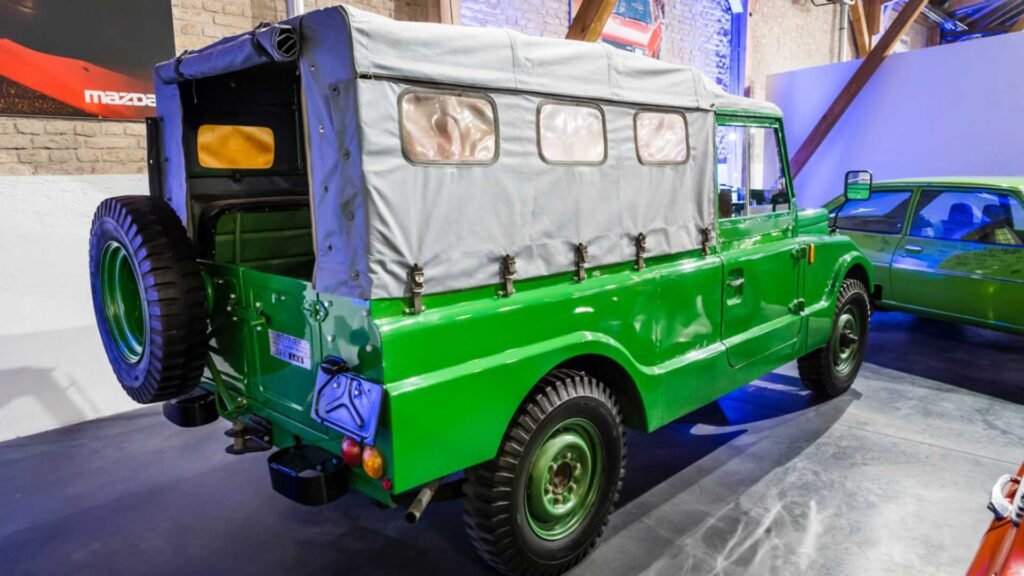
The Pathfinder XV-1 was available in both soft-top and hard-top form. A bright shade of green is the original and most common paint finish, although some vehicles were later repainted in different colors. Its rear bench seating created space for up to nine occupants. The overall design was very similar to that of an early Jeep (the iconic Willys Jeep comes to mind). The Pathfinder XV-1 was a bare-bones, utilitarian off-roader with squared-off lines, round headlights, and a no-frills silhouette.
A 2.0-liter inline-four engine, producing 90 hp, powered most examples of the model. The engine was paired with a three-speed manual transmission. A diesel option of unknown layout, displacement, and power output is also said to have been available. It is also possible that locally sourced engines were fitted to some examples of the Pathfinder XV-1.
The Luce R130: The First FWD Rotary Car In Mazda’s History
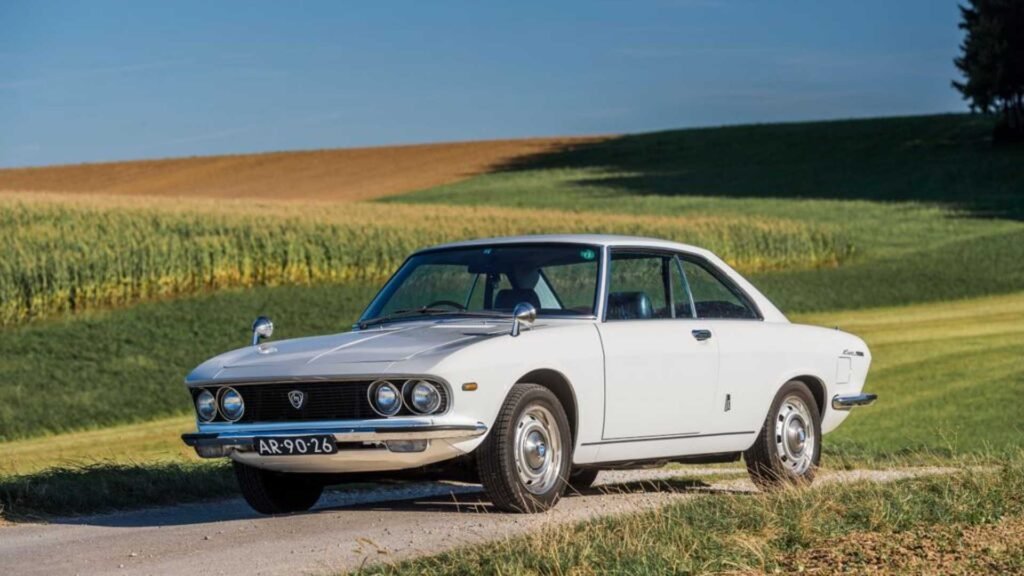
Last, we have the Luce R130, a model with a unique title. It was the first car produced by Mazda to have both a rotary engine and a front-wheel-drive drivetrain. The rotary engine has become one of Mazda’s most iconic features, but back when the Luce arrived on the market, it was only at the start of its journey.
The Mazda Luce launched in 1966, after a development process that had seen Mazda work with legendary Italian designer Giorgetto Giugiaro. It also had another link to Italy through its name, the Italian word for “light”. This name, however, was not used in export markets, where all models in the lineup were simply known by a code related to their respective engines.
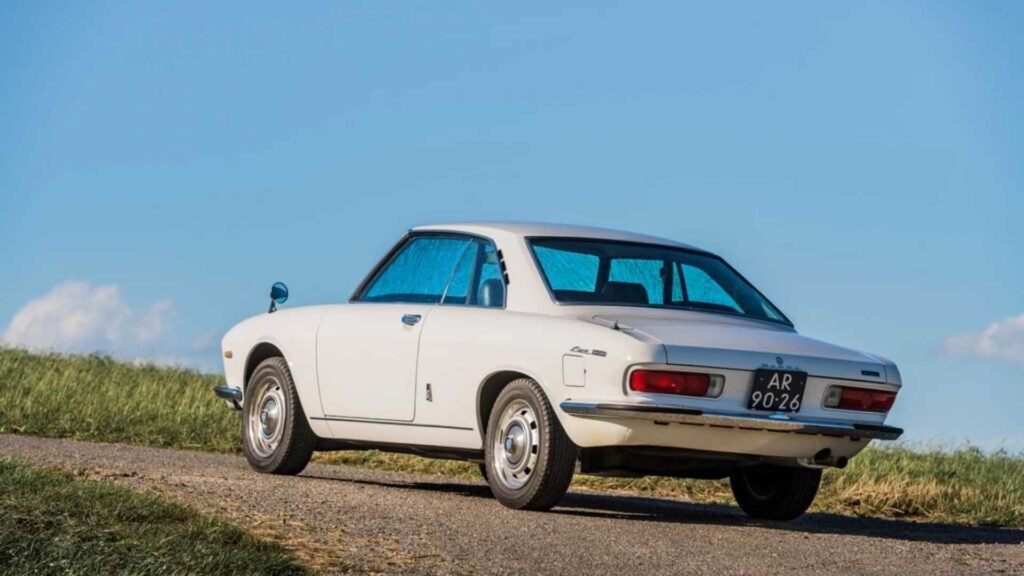
One of these models was the R130, introduced two years after the Luce’s debut, in 1969. Unlike the other models, whose names were entirely numerical codes (such as 1500 and 1800), its name included a letter “R” for rotary, as it was powered by a 1.3-liter rotary engine that produced 124 hp and 127 lb-ft of torque. This setup propelled the R130 to 60 mph in 8.3 seconds.
While other models in the first-gen Luce lineup were available with both a sedan and a wagon body style, the R130 was only available with a two-door coupe body style. It was also a very rare model compared to its siblings. Fewer than 1,000 units are estimated to have been built over a short production run, which lasted between late 1969 and 1972.
It would remain the only FWD model with a rotary engine in Mazda’s history for several decades, until the MX-30 crossover made its debut in 2019. The MX-30, however, was not a successful model and remained on the market for a very short time. It was on sale in the US for just two model years before its discontinuation, and in Europe for not much longer.
Mazda: From Cork To Cars
Mazda’s origins as a company are almost as weird as the three models we just looked at. Rather than starting out as an automaker, Mazda traces its roots back to a very different industry: the production of corks. The brand was founded in 1920 as the Tokyo Cork Kogyo Company and did not produce its first vehicle (a utility trike) until over a decade later, in 1931.
Although World War II slowed Mazda’s progress into car manufacturing, the company flourished in the following years, moving from rickshaws to full-blown cars. The rotary engine, closely associated with Mazda today, made its first appearance in the late 1960s. Developed thanks to Mazda’s work with German brand NSU, it later went on to power several well-known models in the RX family.
The second half of the 20th century saw Mazda grow and develop as a company, thanks to factors such as its debut on the American automotive market (which happened in 1970) and its partnership with Ford, which began in 1974 and would remain active until 2015. Ford started out owning a 7% share of Mazda; this figure grew until it reached a peak of 33.4% in 1995. Later on, however, Ford started to reduce its ownership share and its involvement, until it sold its remaining 2% share in 2015.
Today, Mazda continues to be a fascinating brand, producing high-performance vehicles through its recently created Mazda Spirit Racing division, finding ways to keep the rotary engine alive, and embracing innovation at every turn.
